
Le Roi du Village
Villages that remained.
Historic village cores and hamlets across Europe
Discover the collection- 49Places in the collection
Albarracín, Teruel — Diego Delso · Wikimedia Commons · CC BY-SA 3.0
The collection
Le Roi du Village
Villages, hamlets and old centres where the whole place is the subject, not a single building.

Besalú
Excavations in Besalú's historic centre have revealed Iberian remains dating to 350–250 BC. The municipality's historical account records a market in 1027. By the fourteenth century, Besalú was the principal commercial centre of the Garrotxa, drawing people from the surrounding area.
Editorial selectionCC BY-SA 3.0 es

Beynac-et-Cazenac
Beynac-et-Cazenac · Nouvelle-Aquitaine
Beynac-et-Cazenac lies in the Dordogne department, beside the river that gives the region its name. The settlement rises on a steep limestone slope beneath the château of Beynac, whose origins lie in the twelfth century. Narrow lanes and stairways connect the riverfront with the upper village. Pale stone, tiled roofs and the rocky escarpment give the buildings a close relationship to the terrain. The river was also a route for transport, recalled today by trips in boats inspired by the traditional gabarres. The village is a member of Les Plus Beaux Villages de France. The château is a distinct monument within this wider settlement, with its own admission and visiting arrangements.
Editorial selectionCC BY-SA 3.0

Bosco/Gurin
Bosco Gurin is a village in Ticino at an altitude of 1,506 metres. Its history is associated with Walser settlers arriving in the thirteenth century. The local account connects its cultural traditions with characteristic buildings and rural life, and describes a local language still spoken by residents.
Editorial selectionCC BY-SA 3.0

Bruniquel
Bruniquel acquired a second defensive enclosure in 1355. Its medieval economy included flax, hemp and saffron cultivation. A division of the castle property in 1461 preceded the creation of the younger castle in the sixteenth century; the municipality acquired the castles in 1987.
Editorial selectionCC BY-SA 4.0

Calcata
The historic settlement of Calcata stands on volcanic rock in the Treja valley. Its historic settlement includes tuff houses and streets paved with river cobbles. The square and church have a Renaissance layout, while the baronial palace was reworked between the eighteenth and nineteenth centuries.
Editorial selectionCC BY-SA 2.5

Candes-Saint-Martin
Candes-Saint-Martin · Centre-Val de Loire
Candes-Saint-Martin stands in Indre-et-Loire at the confluence of the Loire and the Vienne. Its pale tuffeau houses, slate roofs and narrow streets belong to the architectural landscape of western Touraine. The collegiate church of Saint-Martin is the village’s principal monument; its substantial silhouette combines religious architecture with defensive features. The settlement is closely associated with the memory of Saint Martin of Tours. The rivers and their junction are central to its geography, while neighbouring Montsoreau extends the riverside landscape into Anjou. Candes-Saint-Martin is a member of Les Plus Beaux Villages de France. The church, village streets and views of the confluence are complementary parts of the place.
Editorial selectionCC BY-SA 4.0

Castel del Monte, Abruzzo
Castel del Monte’s built heritage includes the fifteenth-century Church of the Madonna del Suffragio, later the home of a confraternity founded in 1685. The Church of the Madonna delle Grazie retains an exterior of limestone masonry. The Governor’s Palace dates from the fifteenth and sixteenth centuries.
Editorial selectionCC BY 4.0

Clovelly
Clovelly is a fishing village in North Devon. Its estate passed to the Giffard family in 1242 after a period of royal ownership. Clovelly Court’s gardens contain restored Victorian greenhouses within old walls, and supply fruit and vegetables to the Red Lion Hotel.
Editorial selectionCC BY-SA 3.0

Collonges-la-Rouge
Collonges-la-Rouge · Nouvelle-Aquitaine
Collonges-la-Rouge is in Corrèze, south of Brive-la-Gaillarde. Its red sandstone is the defining material of the village, used in houses, towers and larger residences. The architectural ensemble includes Saint-Pierre church, with Romanesque sculpture, and houses whose forms record medieval and Renaissance building traditions. The château de Vassinhac is one of the distinctive residences within the settlement. Collonges is also associated with the beginnings of Les Plus Beaux Villages de France, the association founded on the initiative of its mayor Charles Ceyrac. The village belongs to that network today. Its interest extends beyond a single monument to the repeated use of local stone across streets, walls and buildings.
Editorial selectionCC BY 2.0

Cordes-sur-Ciel
Cordes-sur-Ciel · Occitanie
Cordes-sur-Ciel occupies a prominent hill in the Tarn department, above the Cérou valley. The town’s medieval street pattern rises through successive levels towards its upper centre. Its principal architectural distinction is a group of Gothic merchants’ houses, with carved stone façades that reflect the prosperity of the medieval settlement. A covered market and the streets around it form part of the upper town. Workshops and artistic activity contribute to its present life. Cordes-sur-Ciel is a member of Les Plus Beaux Villages de France. Its hilltop form, domestic architecture and surrounding cultivated landscape are all essential to understanding the place; the town should not be reduced to the occasional photographs of it above mist.
Editorial selectionCC BY-SA 4.0

Crissay-sur-Manse
Crissay-sur-Manse · Centre-Val de Loire
Crissay-sur-Manse lies in Indre-et-Loire, in the valley of the Manse. Tuffeau houses give the village the pale masonry characteristic of Touraine. The architectural ensemble includes the remains of a château with medieval origins and the church of Saint-Maurice, dating from the sixteenth century. Houses and carved openings record the Renaissance character of the settlement. The village is a member of Les Plus Beaux Villages de France. Its small scale allows the church, residential streets, château remains and valley setting to be read together. The château is a separate property, so the presence of ruins in the village does not imply unrestricted access to them.
Editorial selectionCC BY 4.0

Deià
Deià is a municipality in a valley on Mallorca. Its history includes terraced cultivation and an irrigation and drainage system developed during Muslim rule. The municipality separated from Valldemossa in 1583 after a lengthy dispute over its administration.
Editorial selectionCC BY-SA 4.0

Domme
Domme · Nouvelle-Aquitaine
Domme is a fortified bastide in the Dordogne department. Built on a plateau above the river, it combines a planned street layout with surviving gates and sections of enclosure. The elevated position provides extensive views across the Dordogne valley. The Porte des Tours is one of its best-known fortified entrances and contains historic graffiti, whose attribution should be treated with care rather than presented as proof of a single story. A cave system beneath the town is a separate visitor attraction. Domme belongs to Les Plus Beaux Villages de France. Its character lies in the combination of town planning, defensive architecture, limestone terrain and the river landscape below.
Editorial selectionCC BY-SA 3.0

Eguisheim
Eguisheim · Grand Est
Eguisheim lies in Haut-Rhin, near Colmar, in the Alsatian vineyard landscape. Its compact centre is organised in concentric streets around the former castle area. Half-timbered houses, small courtyards and winegrowers’ buildings line the lanes. The central ensemble includes the château of the counts of Eguisheim and the chapel of Saint-Léon. The village is associated with the Alsace wine route and the nearby grands crus Eichberg and Pfersigberg. Eguisheim is a member of Les Plus Beaux Villages de France. Its architectural pattern and continuing relationship with wine production are more useful guides to the place than unverified claims about film or fairy-tale inspiration.
Editorial selectionCC BY-SA 4.0

Gimmelwald
Gimmelwald is a village in the Bernese Oberland at an altitude of 1,367 metres. Originally a Walser settlement, it is included in Switzerland’s inventory of townscapes worthy of protection. Chalets, cheese stores and farm animals are features of its village setting.
Editorial selectionCC BY-SA 3.0

Gordes
Gordes · Provence-Alpes-Côte d’Azur
Gordes is in Vaucluse, on the edge of the Luberon. Its limestone houses descend from a rocky spur, forming a compact settlement above the surrounding countryside. Steep lanes connect the upper centre and château with the lower parts of the village. The château combines earlier origins with a major Renaissance rebuilding. Dry-stone architecture is another feature of the area, presented at the separate Village des Bories site. Sénanque abbey is also nearby, outside the village centre, and has its own history and access arrangements. Gordes belongs to Les Plus Beaux Villages de France. The village, abbey and bories are related by geography but should be understood as distinct places.
Editorial selectionCC BY-SA 4.0

Hallstatt
Hallstatt's museum presents finds from salt mining and the Hallstatt cemetery within an account extending from the Stone Age to the present. The museum explains that these discoveries gave their name to the Hallstatt culture, dated in its account to 800–450 BC.
Editorial selectionCC BY-SA 4.0

La Roque-Gageac
La Roque-Gageac · Nouvelle-Aquitaine
La Roque-Gageac lies in Dordogne, along a narrow strip between the river and a limestone cliff. Houses with pale stone walls and tiled roofs follow the riverfront and climb into the limited space above it. Manoir Tarde is a prominent architectural landmark. The cliff contains a troglodyte fort, while a sheltered garden introduces plants associated with the village’s favourable exposure. Traditional river transport is recalled by gabarre trips on the Dordogne. La Roque-Gageac is a member of Les Plus Beaux Villages de France. The fort and boat excursions are separately managed activities; a walk through the village offers its own view of the relationship between river, houses and rock.
Editorial selectionCC BY-SA 4.0

Lavardin
Lavardin · Centre-Val de Loire
Lavardin is in Loir-et-Cher, beside the Loir rather than the Loire. A ruined château occupies the rocky height above the village; its surviving keep is a defining feature of the skyline. Below it, the church of Saint-Genest preserves mural paintings from several periods, including medieval work. A Gothic bridge crosses the river, and buildings cut into or attached to the rock add to the settlement’s character. Lavardin is a member of Les Plus Beaux Villages de France. Its castle ruins, church, riverside and domestic buildings form a compact ensemble. Each monument has its own access conditions, particularly where the ruined fortress and painted interior are concerned.
Editorial selectionCC BY-SA 3.0

Les Baux-de-Provence
Les Baux-de-Provence · Provence-Alpes-Côte d’Azur
Les Baux-de-Provence occupies a rocky spur in the Alpilles, in Bouches-du-Rhône. The historic village contains narrow stone streets and buildings beneath the extensive remains of its château. The elevated site commands views across the surrounding rock formations and cultivated landscape. Olive growing is an important part of that setting. Nearby former quarries now host cultural presentations, but are a separate attraction from the village and château. Les Baux-de-Provence is a member of Les Plus Beaux Villages de France. Its significance is both architectural and geographical: the settlement, fortress and limestone terrain should be read together.
Editorial selectionCC BY-SA 4.0
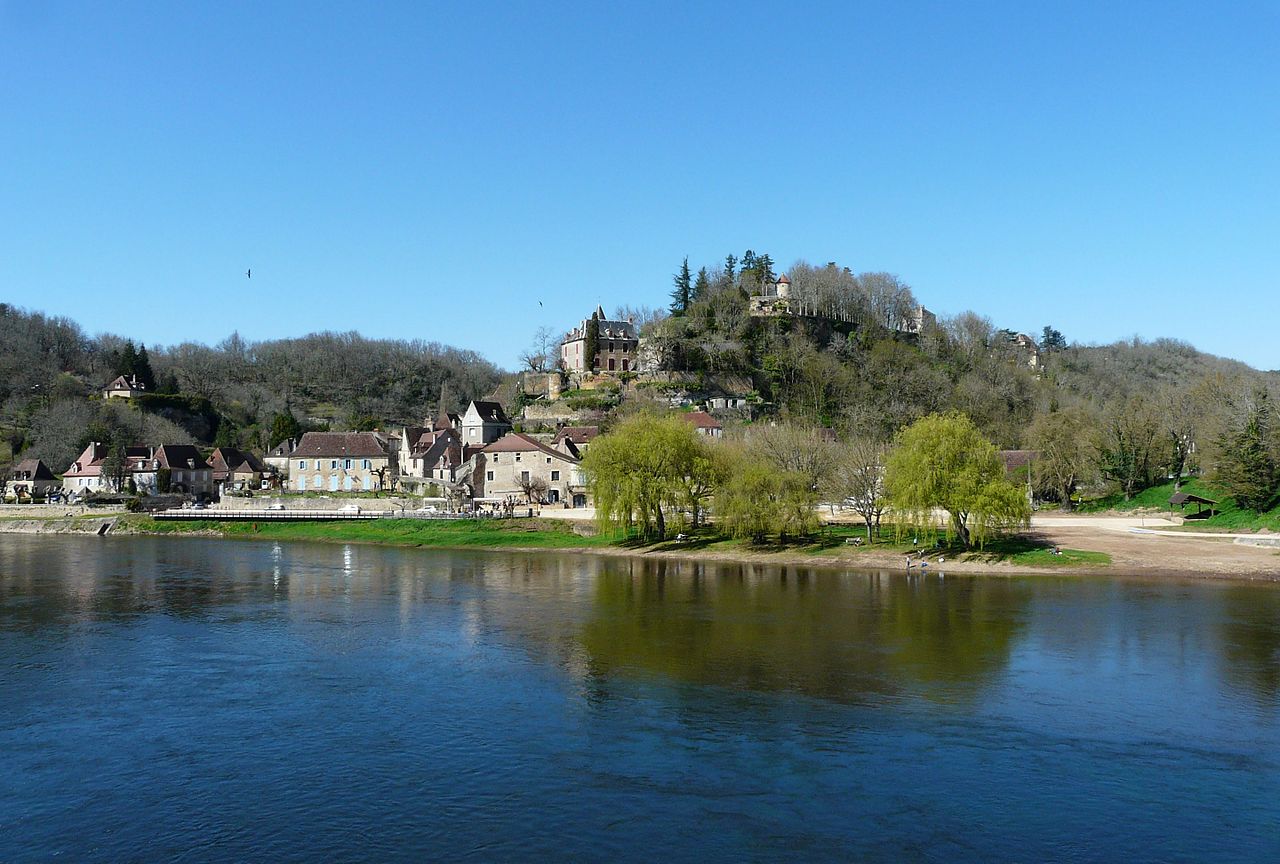
Limeuil
Limeuil lies at the meeting of the Vézère and Dordogne. Two bridges have crossed its rivers since 1891. The village prospered in the nineteenth century through its port and river transport, with traditional flat-bottomed boats stopping before continuing towards Bordeaux.
Editorial selectionCC BY-SA 4.0

Locronan
Locronan · Bretagne
Locronan is in Finistère, in western Brittany. Granite houses around the central square recall the prosperity of a town associated with sailcloth production, particularly during the sixteenth century. The church of Saint-Ronan, with the adjoining Pénity chapel, anchors the architectural ensemble. The surrounding streets extend the same material character beyond the main square. Religious traditions remain part of Locronan’s identity, notably the Grande Troménie pilgrimage. Locronan belongs to Les Plus Beaux Villages de France. Its importance is not limited to a picturesque centre: commercial history, local stone and religious practice all contributed to the settlement visible today.
Editorial selectionCC BY-SA 4.0

Mojácar
Mojácar’s village stands on the last spur of the Sierra de Cabrera and is characterised by white houses and narrow streets. Its surrounding landscape includes ravines, coastal areas and the wetlands of the Aguas river. Local traditions include the Moros y Cristianos festival and the Night of Candles.
Editorial selectionCC BY-SA 3.0

Montrésor
Montrésor · Centre-Val de Loire
Montrésor stands on the Indrois in Indre-et-Loire. Its château combines medieval remains with a Renaissance residence, later associated with the Polish collector Xavier Branicki. The collegiate church of Saint-Jean-Baptiste and the village’s market hall add different civic and religious landmarks to the ensemble. Houses and lanes occupy the ground between the château and river, while the banks of the Indrois provide views of the settlement as a whole. Montrésor is a member of Les Plus Beaux Villages de France. The château and its collection are a distinct visitor site; the village’s streets, church and river landscape form a wider subject.
Editorial selectionCC BY-SA 3.0